I've been working in SEO and digital marketing for the past 11 years, and if there's one thing I've learned, it's that the industry never stops changing. Every few years, a new technology comes along that promises to make our jobs easier, faster or, apparently, completely unnecessary.
Artificial intelligence is probably the biggest change I've seen so far. And despite how suddenly ChatGPT and Claude seemed to appear in everyone's lives, AI has been part of how businesses operate for much longer than most people realise.
I remember my first job in the UK, working at TikTok, where we were already using internal systems and automation with AI to improve how processes worked across the company. We were dealing with enormous amounts of content and information, so creating more efficient workflows wasn't just useful. It was necessary. The technology was different from what we have today, but the thinking behind it was similar: how can we make systems work better, reduce repetitive tasks and give people more time to focus on the decisions that matter?
Fast-forward to 2026, and we're using tools that would have seemed almost impossible a few years ago. AI can analyse information, help develop marketing strategies, create images, write content and support entire workflows. And it's all happening incredibly quickly.
But having spent years working with technology, I'm not convinced that automating everything and removing people from the process is the answer. At least, not yet.
We're not using AI to replace our team. We're using it to make their jobs easier
At The Zoom Agency, an international creative and performance marketing agency working with B2B and B2C brands in the UK, EU and US, one of our biggest priorities is improving how we work behind the scenes. We're constantly looking at how AI and marketing automation can simplify processes across different departments, from content creation and social media to campaign management and reporting. Not because we want to replace people, but because we want our team spending more time on the work that actually needs their expertise.
Take our creative team, for example. We have designers who understand our clients' brands, know their visual identities and develop the content that eventually appears across their marketing channels. They might use AI to research ideas, explore creative directions or speed up certain tasks, but the final design is still their work.
AI-generated images and content can be impressive, but they're not always accurate, consistent or good enough to represent a brand. Sometimes the result needs a few adjustments. Sometimes it needs to be completely reworked. That's why we still rely on experienced people to make those decisions.
Where automation becomes particularly useful is everything that happens around the creative process.
Imagine planning three months of social media content. Instead of creating a post in the morning that needs to go live, we can build the strategy in advance, brief our designers, prepare the content, approve everything and schedule it through a publishing platform. Once the creative is approved, the distribution process can happen automatically.
Nobody needs to remember to publish a post at 9 am on a Friday. Nobody needs to spend their morning copying captions between platforms. And the team doesn't have to interrupt another project simply because something is due to go live.
More importantly, it gives us room to react when something unexpected happens.
If a client has an important announcement, a new product launch or an opportunity to respond to something happening in their industry, we have the capacity to focus on it.
That's what interests me about automation. Not just doing more work in less time, but creating better systems so we can spend our time where it actually matters.
Marketing automation should understand the customer, not just the schedule
Email marketing is another good example.
Imagine someone has just signed up to a company's mailing list. They're discovering the brand for the first time, so the first thing they receive should probably be a welcome email introducing the company and explaining what they can expect.
A returning customer who has already purchased several products doesn't need that same introduction. They might be more interested in a new product, something related to their previous purchase or information that helps them get more value from what they've already bought.
With the right marketing automation system, we can create different customer journeys based on how people interact with a brand. That could include welcome sequences, post-purchase emails, abandoned-cart reminders or content based on products and topics someone has shown an interest in.
This is also why I think good email marketing involves much more than designing a newsletter and pressing send. Whether you're working with an in-house team or an email marketing agency, the important part is understanding what each customer needs at each stage. You can automate the delivery, but the segmentation, messaging and strategy need to be carefully planned first.
None of those automations should exist simply because the technology allows us to create them.
Someone needs to understand the customer journey first.
Why did that person subscribe? What are they looking for? What information would actually be useful? And at what point does sending another email become annoying rather than helpful?
Those are marketing decisions, not automation decisions.
AI can support audience research, segmentation, content development and testing. Marketing platforms can then deliver the right messages at the right stages of the journey, provided the data and permissions are in place.
But the strategy behind those messages still needs to come from people who understand the business and its customers.
And once everything is running, we need to look at the results. If customers aren't opening the emails, clicking through or taking the intended action, something needs to change.
There's no point automating a process that isn't working.
AI is changing SEO too. But understanding people is still the starting point
My background is primarily in SEO, so this is probably the part of AI I'm most interested in.
Over the years, I've worked with different websites, markets and audiences, and the one thing that has always mattered is understanding what people are actually searching for.
That hasn't changed with AI. What's changed is how we research those questions, how people discover information and the tools available to help us.
This year, I've spent time studying AI, SEO and generative engine optimisation through courses from Google and IBM, alongside other industry providers. One of the most useful things reinforced through that learning is the importance of combining AI with structured processes, reliable information and human evaluation.
For example, IBM's GenAI for SEO course explores how AI can support keyword research, topic clustering, content briefs, on-page optimisation and structured data. These are tasks that traditionally take considerable time, especially when working across multiple websites or languages.
But AI doesn't magically know which keywords are worth targeting for a particular business.
We still need to understand search intent, competition, the existing website, commercial priorities and what the audience actually needs.
That's why we combine AI research with professional SEO platforms, analytics data and competitor analysis. Having worked in SEO for years, I know that good optimisation involves more than identifying popular keywords. Whether we're developing a content strategy for a business or improving international search visibility, we need to understand what people are searching for, why they're searching and what would make them choose one business over another.
At The Zoom Agency, we're bringing this approach into our wider AI and SEO work, combining traditional search engine optimisation with new tools that help us research opportunities, identify content gaps and understand how brands appear across AI-powered search experiences.
For businesses looking for an SEO marketing agency, I think understanding this distinction is becoming increasingly important. Technology can speed up keyword research, content analysis and technical checks, but the strategy still needs to make commercial sense.
The same applies to generative engine optimisation (GEO), which looks at how businesses are discovered and represented across AI-powered search experiences such as ChatGPT, Google Gemini and Google's AI search features.
Traditional SEO remains important, but we're now also considering questions such as whether a brand appears in AI-generated answers, which sources are being referenced and whether its content clearly communicates its expertise.
This is why I find AI so interesting. It's not only giving us new tools to work with. It's changing the way customers search, discover and evaluate businesses.
And as marketers, we need to understand both sides.
AI isn't always right. Neither are we
Something I appreciate about Google's AI training is its emphasis on responsible use, evaluating outputs and understanding that AI systems can make mistakes. Because they absolutely can.
AI can generate incorrect information, misunderstand a brief, produce misleading statistics or confidently give you an answer that sounds convincing but isn't true.
I've seen how useful these tools can be, but I've also learned not to trust an output just because it looks professional.
In marketing, accuracy matters. If you're creating content for a healthcare business, for example, a small factual error can become a much bigger problem than a typo in a social media caption.
The same applies to client data, campaign reporting and anything involving sensitive business information.
We need to check the sources, review the output and make sure we're using information appropriately. That includes protecting confidential client data and deciding which tools are suitable for different tasks.
Of course, people make mistakes too. I don't think the argument should be that humans are perfect and AI isn't.
The advantage comes from combining them.
AI can help us identify patterns, explore different approaches and process information quickly. Our team can question the results, interpret the context and decide whether the recommendation actually makes sense.
That's how technology becomes useful rather than something we're simply using because everyone else is.
The real goal is better results for our clients
At the end of the day, our clients aren't hiring us because we know how to use ChatGPT, Grok or the latest automation platform.
They're hiring us because they want their businesses to grow.
That might mean generating more qualified leads, increasing subscriptions, improving online sales, reaching new audiences or getting more value from their marketing budgets.
And there isn't one formula that works for everyone.
We start by understanding the business, researching the audience and identifying where the opportunities are. Then we develop a strategy, create the content or campaigns, test different approaches and measure what happens.
A/B testing plays an important role here. We might compare different advertising messages, landing pages, email subject lines or creative concepts to understand what resonates with a particular audience.
Sometimes the idea we thought would perform best doesn't. That's part of marketing.
The important thing is learning from the results rather than becoming attached to an idea simply because we liked it.
We use AI and automation to make that process more efficient, but we still need reliable data, sensible tests and people who can interpret what the results mean.
We're always looking for ways to improve performance month after month, while recognising that results won't increase in a straight line forever. If something is working, we look at why. If it stops working, we investigate and adjust.
That's what good marketing should be about.
Less admin. More thinking. Better creative
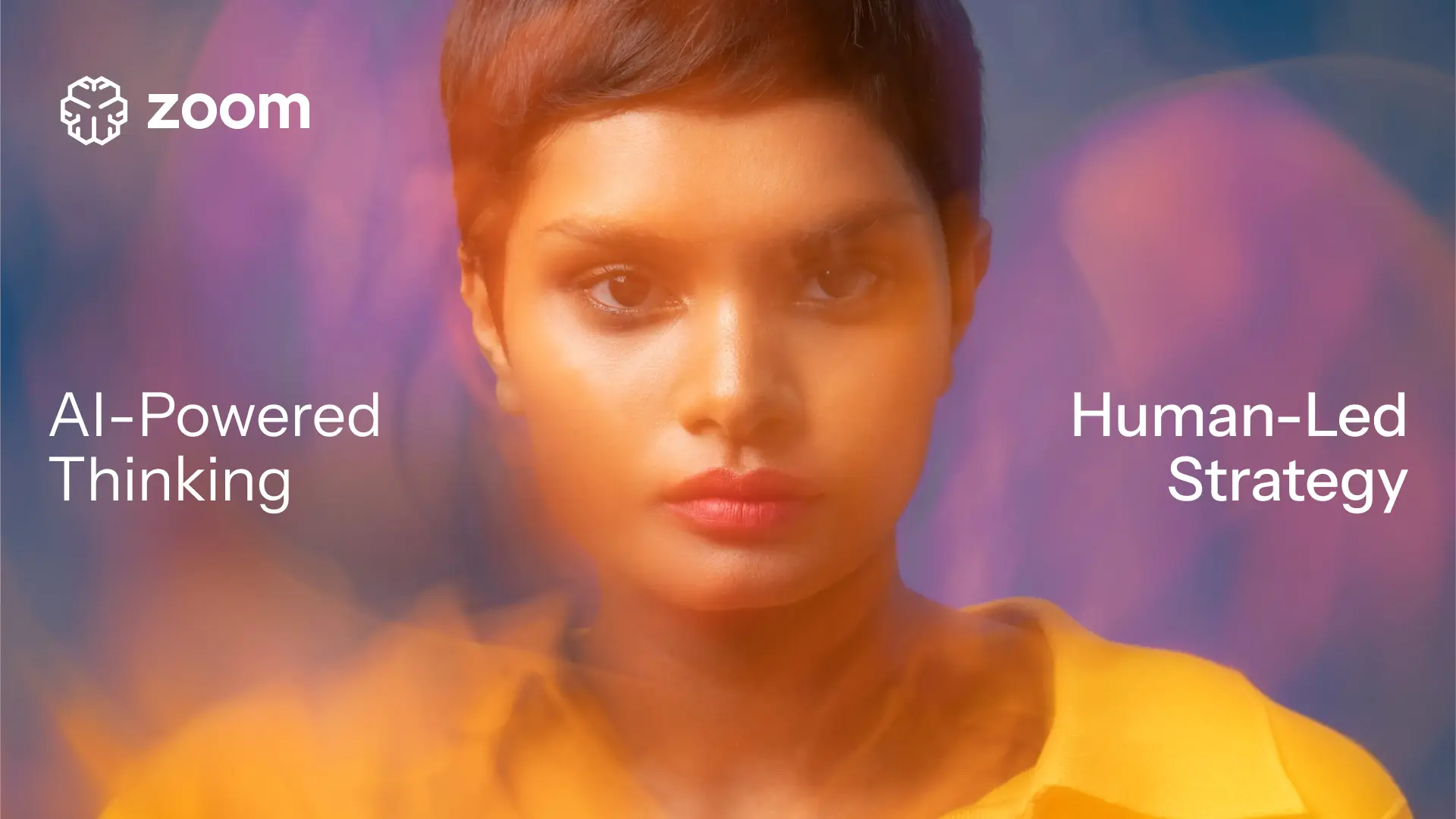
I don't think the future of marketing is about choosing between AI and people. It's about understanding what each does well.
At The Zoom Agency, we're focusing on building better systems across the agency, connecting the tools we use and reducing the amount of time spent on repetitive work. We want our designers designing, our strategists thinking, and our marketing specialists spending more time understanding customers and improving campaigns.
If AI can make research faster, great. If automation can simplify an approval process or schedule months of content, even better.
I think that's where marketing agencies have a real opportunity. AI and automation can reduce time spent on repetitive tasks, while experienced teams focus on creative thinking, customer research and improving performance. It doesn't matter whether we're working on SEO, social media marketing, email marketing or paid advertising. The goal is to build better processes so we have more time to understand what works for each business and keep improving it.
But we don't want technology to become an excuse for publishing generic work, ignoring the customer or removing the human judgement that makes a campaign successful.
The more efficient our systems become, the more time we have to develop ideas, experiment, pay attention to detail and respond to what our clients need.
And for me, that's the real opportunity.
AI makes the process faster. People make the work better.
Explore our marketing services, see our latest projects or get in touch to discuss how we can support your business.